Tuesday, 4 October 2016

"How social media is turning peoples' private breakups into 'celebrity' spats"

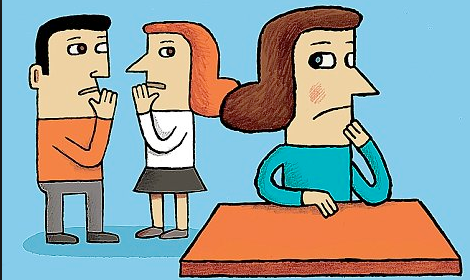
There are increasing numbers of ordinary couples are opting to go through “public” divorces as a result of the rise of social media, according to lawyers. Cara Nuttall, a lawyer quotes "They suggest that if it's good enough for this actress or pop star, then it's good enough for them". There is no doubt that a growing proportion of individuals of a certain age regard preserving their reputations among social and professional peers as one of the main concerns when they come to talk about getting divorced.

  • Solicitors have handled more than 300 divorces over the course of the year 
  • More than one in 10 cases of divorces now include a spouse attacking the other on social media before they agree the terms upon which they separate
Social media, particularly networks such as Twitter is notorious for throwing shady tweets about their peers or any individual for that matter. It is now possibly a place where users share their emotions with no regard of a face-to-face conversation of perhaps how they feel with their partner, family member, friends, etc, and instead vent publicly on social networks. This in the future can be an unhealthy development, where people are so clung towards e-media that they are isolated from human interaction and intervention, which develops to social problems. Sometimes in anger too, split partners may release content publicly that may be explicit, doing more damage than intended, which is never a good thing as "Taking something off the Internet is like taking pee out of a pool", as once said by a media theorist. 


Kim Kardashian gets finessed


Infamous Kim Kardashian was held gunpoint during her stay in Paris, where she was finessed for millions of pounds worth of of jewellery from robbers after making herself a target by flaunting her lavish lifestyle on social media, police have said. 


  • 48 million followers on Twitter
  • Anyone can easily be tracked using social media, as some users like to project their everyday life on social networks such as Twitter, Snapchat, Periscope, Etc
The incident was a result of a picture posted by her, showing her huge pure diamond ring. Acknowledging Kim's fame on Twitter, or any social platform for that matter, information about her were being exposed, where she was, such as her location - hotel name, street, how many weeks she was staying, etc. Her tweets almost broadcasted her life too much, giving these robbers enough information to 'perfectly' plan the upcoming situation. Issues such as these are the pinnacle of violating peoples' privacy on the Internet, example all it takes is a person's full name to be stalked, or known in computer terms to be 'Doxed'. 
Also as a result, she was victim to Internet, met by online abuse and cruel jokes, simply from the anonymity of the users, depending on whether their profile was private or not, or even signed in as guests.

Image result for stalking


Sunday, 2 October 2016

NDM case study: How has has news changed over the 20 years?

NDM case study: How has news changed?

Blog task: Ofcom report into news consumption 2015

  • 2921 people were surveyed
  • Nine in ten adults in the UK (89%) say that they follow news1 (on any platform)
  •  67% of UK adults saying they use TV as a source of news
  • ^ But there has been a 8% decrease since 2014 (75%) following a three percentage point decrease between 2013 (78%)
  • The number of people who use the internet or apps for news has remained the same since 2014, with just over four in ten (41%) doing so, compared to just under a third in 2013 (32%).
  •  Newspapers are used by three in ten (31%), which represents a decrease of nine percentage points since 2014 and 2013 (when 40% of UK adults said they used newspapers for news). 
  • ^ There has also been a decrease in those that say they use radio as a source of news (from 36% in 2014 to 32% in 2015).
  • One in ten (10%) of adults say they don’t follow news, compared to 5% in 2014 and 7% in 2013
  1. Two-thirds of adults say they use TV for news, compared to three-quarters in 2014, perhaps the change for this was due to other convenient devices used to consume TV, such as smartphones.
  2. ) People living in England are less likely than those in Wales and Northern Ireland to say they use television to access news (66% vs. 72% in Wales and 75% in Northern Ireland). Perhaps the population in each area has an influence in the overall net percentage, meaning a lower margin would make a more significant difference as opposed to a larger margin of people.
  3. People in the AB socio-economic group are more likely than those in the DE socio-economic group to consume news on any of the four main platforms: TV (71% vs 67%), the internet (50% vs. 29%), newspapers (38% vs. 26%) and radio (46% vs. 23%). Perhaps the change of attitudes is influenced by the type of news they choose to consume.
  4. Those aged 55+ are more likely than those aged 16-24 to use TV, newspapers and radio for news consumption, while the opposite is true for the internet/ apps
  5. 4 major platforms- 3.5 sources used.
  6. ) BARB figures show that each adult watched 108 hours of national and international news on television6 in 2014 (figure 3.1). This represents a decrease of seven hours since 2013 (when the average number of hours was 115) and 13 hours since 2011 (when the average was 121 hours). So total hours of national and international news view have decreased since 2013. 
  7. ) According to NRS10 figures, the reach of national newspapers has declined considerably in the past ten years, with reach among adults falling by 27 percentage points since 2005 (from 72.4% of all adults in 2005 to 45.4% in 2015) (figure 5.1). Nevertheless, reach has been relatively stable year on year (48.1% in 2014).
  8. ) Reach of national newspapers varies by age group: 29.3% of 15-24s are print newspaper readers, compared to 67.9% of over-65s.21% of those aged 16-24 said they used newspapers as their main source of news whilst 44% of those aged 55 and over said they used newspapers. These figures are to be expected as a higher percentage of younger people use the internet for their news.
  9. The most popular news source used to access news specifically about Scotland is BBC One; a third (33%) of news users in Scotland say they use it for this purpose (figure 10.7). This is followed by ITV (20%), the BBC website or app (12%), Facebook (9%), the Sky News channel (6%), and the BBC News channel and other local commercial radio stations (both 4%). 
  10. ) About six in ten (61%) 16-24s who use the internet/ apps for news say they use social media sites, compared to just over a quarter of those aged 55+. Perhaps the new digital media divide and their associations and consumption has influenced this. 
  11. About six in ten (61%) 16-24s who use the internet/ apps for news say they use social media sites, however, only a quater if over 55's would say that they use social media as an access to news.
  12. Of those who use the internet or apps for news, around half (51%) say they use the website or apps of TV and radio companies to get news (figure 6.1). More than two in five (43%) respondents say they use social media sites.
  13. The Sun was the most popular (with just under 5.2 million users vs. 3.5 million for the Daily Mail). Conversely, looking at readership for websites only, the Daily Mail had 1.8 million users, while The Sun had 0.06 million.
  14. ) 61% of 16-24 gap use social media for news.
  15. ) 30% of those who used social media for news said they ‘mostly’ accessed their news stories through social media posts, compared to 38% who said they ‘mostly’ accessed them directly from the websites/apps of news organisations.
  16. ) Audiences now in the NDM age are now able to access news using a variety of methods, different from the traditional media sought out before. As a result peoples' knowledge from the news they consume is greater than before.
  17. ) NDM has benefited institutions as a result too, they now have a wider access to audiences as developments in technology expand by the day, making convenience from the use of news apps, websites, etc. 
  18. ) Not everything on the Internet is true, so there are lots of false information being spread around, examples include the infamous Wikipedia, where vandalism is subject as ANY user can change information presented. As a result, these kind of information being passed around could be the sources to any news institution, providing them with the wrong facts that could damage their brand image and reliability.  
  19. ) Audiences might be fed unreliable news, and as a result are led to believing false information which is never a good thing because audiences are simply passive to what they're being fed, and false news is definitely not good.  
  20. ) NDM has benefited both audiences and institution. Audiences now have a more convenient access to news, whether it's from accessing it from their smartphone news app, video, whenever, they're simply not limited to consuming knowledge, plus from the fact that news is free, unlike newspapers which had to be bought. Established the fact that NDM has caused the decline of newspapers, institutions now have to shift their service onto another platform, along with other competitors (other information sites, e.g. Wikipedia). 

Saturday, 1 October 2016

NDM Learner response

NDM baseline assessment learner response:

WWW: Some well argued , original points. Good critical anatomy. 
EBI: Needs more content/ More on institution/Pareto's law and include a conclusion.

...Conclusively, yes, developments in new/digital media do empower audiences but maybe only to a certain extent. There are both downsides and advantages of information being held in the Internet for example, and sometimes the mutuality between free speech and having a voice in the realm of the Internet is unbalanced. Yes, peoples' opinions can be shared in the Internet, such as in social networking platforms like Twitter, however to have access to such a big fan base with genuine users that are interested with your profile is an obstacle to start with. Therefore as a result opinion leaders (and stated by Pareto's law) rightfully deserve their name, as they hold and 'control' social platforms. Fortunately, Twitter has features such as the 're-tweet' and 'like' button, where there is a synergy of posts that pop up on peoples' feeds, and there is kind of a snowball effect, where one re-tweet may result in a thousand re-tweets, simply from the mutual support users in Twitter have. But all in all, in this day and age where e-media is constantly evolving, it is safe to say and lean towards the fact that audiences do have power, however certain factors always influence the dynamics of such a complex place like the Internet.

...Institutions could also hinder peoples' voices. Example in news, particularly when there's a live interview, if something is leaked or something said that puts a bad name, they will not air it and try to conceal and cover up what was said as much as possible. This is a perfect example of corruption and a tyrannical media. An example follows in August, 2008, where a 12-year old American girl visiting relatives during the conflict in South Ossetia had thanked Russian soldiers for saving her from the Georgian attack. However, America's Fox News attempted to cut her and her aunt off air, trying to reason it with a "commercial break".

Tuesday, 27 September 2016

Sexually explicit Sunday Sport ads banned despite 'censorship' claim

Two sexually explicit ads for telephone chat lines on the back page of the Sunday Sport have been banned by regulators, despite claims from the advertiser that the move would amount to censorship. The ads were illustrated with pictures of women in the process of undressing and with their breasts partly exposed, and were accompanied by taglines including “XXX Sex Stories” and “Filthy Sex Chat with Hot TGirls!”. This sort of adult content may obviously be exposed to children, therefore it is an issue of the matter that people at such young ages being caught with inappropriate material is unhealthy, whether it was intentional or not.

  • 'Daily Sport' and 'The Sun' are known for their explicit content
  • Other newspaper companies such as 'The Guardian', 'The Telegraph', 'Times', 'Independent', etc display coherent, appropriate 'hard news' 
The fact that children being exposed to content obviously not suitable for their age, not just through E-media, the free Internet but even by a more 'selective' content such as newspapers is unhealthy. To an extent this sort of desensitizes these young audiences' view of the particular adult content, which is again unhealthy as they're so used to it. The publisher of the Sunday Sport argued that the newspaper was clearly targeted at adults and it had run similar ads before and had received no complaints. This is quite a plausible argument, since newspapers are a dying media, therefore the margin between e-media, more likely to be accessed by younger people and occupied by it due to New Digital Age and it's influences makes a difference in the sense that they're likely to not encounter the content on newspapers, given they most very likely do not watch news, let alone read newspapers.


Image result for censorship

"Facebook friends of Syrian refugee marrying female British aid worker from Calais Jungle"

The story of a Syrian refugee who contacted British aid worker, 17 years his senior, was reunited using Facebook. They last studied together in Syria, and so suspicions grew from friends whether their love was genuine, that refugee Hamoude Kahlil was simply using Sarah for citizenship. The fact of Sarah Gayton (as pointed out by the article) lives in a £800,000 home in Chiswick, west London, perhaps makes their assumptions more plausible, yet still discriminating and prejudice in a way.

  • Over 3 million refugees have fled from Syria
  • 6.6 million are displaced
  • estimated 20,000 Syrian refugees in UK
Point being, social network Facebook has helped these two reunite and keep in touch, genuine love or not it is not anybody's business, and they do not pose a threat. What however poses a threat are for example Islam extremists/radicals/ISIS, who shamelessly put up posts of recruitment, therefore from any humane point of view people have every right to say there is a moral panic and that this form of contact is an issue. Prime examples include from late last year, November 2015, where two teens fled Austria to join ISIS, and were later 'beaten to death for trying to escape from Syria'. A similarly shocking story which also happened most, most recently in August this year, was when an ISIS bride, only 17 from the UK, was killed while again trying to flee from Syria. 

Bottom line of things, ISIS and these young girls had been together, influenced by the power of social networks like Facebook, and perhaps as a result Facebook will need to better their monitoring. 

Monday, 26 September 2016

How has

How has news changed over the past 20 years?

News, in terms of their tangible sources such as newspapers are a dying media in modern day, however about more or less 20 years ago they were a significant part in peoples' consumption, just before the New Digital Age stepped in and changed the dynamics of news. This new digital age has pioneered the meaning of 'free news' and peoples' consumption as a whole, now in the modern age people have a more convenient access to news, whether it's accessing it from their smartphone, computer, tablet, etc. Now, news is even free, so people are more knowledgeable of how the world works and the things around them. Other features of online news and e-media that ease people is also the translation, foreign readers can now be able to consume news at the same level of any civilised English speaker, and are not restricted in any way of their rights to know something. 

As of even more, now in the modern age the consumers could also create content for their consumers, meaning they are allowed to act as a 'citizen journalist', where they capture videos or images relevant to a news as any normal citizen, not working or influenced by a specific institution/company they're working for. This adds different aspects and views to any story, a prime example was the raging of the #BlackLivesMatter campaign, Alton Sterling was seen to be shot by an officer simply by resisting, but as we gain more knowledge about the situation, we later learn that Sterling was armed. Conclusively, the point here is that people now aren't being forcefully fed news by the media, they are now able to chose and have a plausible opinion based on what they're seen so far on their own as human beings. This is especially a benefit because as we know the media can be devilishly deceptive and turn a story around, just to make a headline and sell their news.