Saturday, 20 May 2017

Story #75

http://www.adweek.com/brand-marketing/fcb-brazil-created-a-calculator-to-show-newspaper-readers-the-cost-of-government-corruption/

Story #75 "FCB Brazil Created a Calculator to Show Newspaper Readers the Cost of Government Corruption"

As the article states, the tool, which appears on the paper’s website, converts the amount of money each corruption scandal reported by the paper costs Brazilians, in terms of water, school lunches and vaccines. It lets readers calculate the benefits and services that could have been provided with the funds had they not been diverted because of corruption. As major U.S. media outlets like the New York Times, the Atlantic and Vanity Fair boost their marketing efforts to highlight the importance of journalism in turbulent political times, FCB Brazil is working with one newspaper in Brazil to help it do the same. The Brazilian media is hard at work exposing government corruption, as public services in the country are in a state of collapse. So, FCB Brazil created a tool for Brazilian newspaper O Estadão de São Paulo to show the cost of government corruption, in real-life terms.

Story #74

https://blogs.spectator.co.uk/2017/05/when-politicians-buy-the-newspaper-front-pages-fake-news-is-born/#

Story #74 "When politicians buy the newspaper front pages, they create fake news"

As the article states, newspapers everywhere are in trouble, with advertising revenues down about 20 per cent a year. Local newspapers are worst hit and many are on the brink of collapse, sacking staff and pages. But there can be no more depressing sign of their distress than to see newspaper owners selling front pages to political parties. The collapse of the print advertising market means that papers (especially local ones, who derive most of their income from advertising) have had to to go to ever-greater lengths to secure funding. Using the front page as advertising space is, in a way, a return to the days when every newspaper had small adverts on their front page. But now, a single client can pay for a front-page takeover. Usually, it’s glaringly obvious that it’s an advert: it will be for a car, perfume or somesuch.

Story #73

http://www.abc.net.au/news/2017-05-18/crinkling-news-saved-as-crowdfunding-target-reached/8536646

Story #73 "Crinkling News, Australia's only kids' newspaper, saved as $200k crowdfunding target reached"

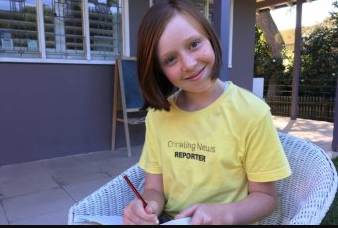
As the article states, Australia's only kids' newspaper has raised enough funds to ensure its survival, at a time when print publications are struggling as advertising migrates online. Crinkling News reached its $200,000 crowdfunding target today, with just eight hours to go in the two-week campaign. Crinkling News has since seen growth in subscribers, and is posted out weekly to 800 schools with a readership of 30,000 people. However, the print publication was struggling to survive after running out of seed funding. On the crowdfunding page, the team said the paper was close to becoming a self-sustaining publication and just needed a boost to "take that final step".

Tuesday, 16 May 2017

Story #72

#Story 72 "Newspaper decline continues to weigh on AP earnings"

As the article states, NEW YORK (AP) — Earnings at The Associated Press shrank substantially last year compared with 2015, when the news organization enjoyed a large tax benefit that skewed its results. Revenue also edged downward, reflecting continued contraction in the newspaper industry and a stronger U.S. dollar that reduced the value of overseas sales. Net income last year shrank to $1.6 million from $183.6 million in 2015, a 99 percent decline. The 2015 profit figure was bolstered by a one-time, $165 million tax benefit. AP's 2014 net income of $140.9 million was also boosted by a large non-recurring gain from the sale of a stake in a sports data company. In 2013, net income at the AP — a not-for-profit news cooperative — was $3.3 million. 

  • New York AP's net income last year shrank to $1.6 million from $183.6 million in 2015, a 99 percent decline
Image result for new york associated press

Story #71

Story #71 "Newspaper ad spend takes hit in April, dropping 26.3%"

As the article states, Australia’s media agency market is reporting a 6.8% decline in advertising expenditure in April 2017 to $501.9 million, with newspapers taking the biggest hit. According to preliminary figures from Standard Media Index (SMI), newspapers saw ad spend drop by 26.3% in April compared to the same period in 2016. The dramatic drop in revenue is a major driver of the cost-cutting initiatives currently underway at News Corp and Fairfax, with Fairfax recently axing 125 jobs from its editorial team. TV saw a smaller 6.6% fall year-on-year, with digital also dropping 9%, however data from the sector is usually revised later. Outdoor and radio both recorded 5.5% rises and cinema advertising climbed an impressive 32.9%.

  • 6.8% decline in advertising expenditure 
  • 125 jobs gone from editorial teams at News Corp and Fairfax
  • 6.6% decline in TV
  • Radio with 5.5% rise and cinema advertising with 32.9%

Tuesday, 9 May 2017

Section B essay attempt

'Does your case study suggest that new and digital media have had a positive impact by offering audiences a more diverse range of values and ideologies?'

It is without a doubt that the new and digital media has had a substantial influence in how it offers audiences a more diverse range of values and ideologies, therefore empowering them to an extent. The positive impact as a result is due to the audience demonstrating the ‘uses and gratifications’ of how they would use these particular products that new and digital media has offered them. It also means that both the media producers and audiences have a “supply and demand” relationship, as audiences may no longer remain passive but instead make use of what is being created by the media product. A prominent example is the user-generated content that enables the audience to look at the content and express their own opinions about it in social networks like Twitter for example. Other similar examples are when Apple’s music streaming service and social networks are a great combination in the sense that they support each other by spreading attraction to a particular music artist. 
User-generated content has had a positive impact as it has enabled the audience to view a “reality” of the things going around, and gives them an alternative option as opposed to consuming information from trusted news broadcasting companies such as BBC. This means that there is more freedom experienced by the audience as they have access to more diverse information that isn’t mediated and filtered usually for the public eye to see. An example includes the “#BlackLivesMatter” movement, where numerous UGC have been released on the Internet of prejudice and discriminatory cases against the black community. Footage such as Eric Garner’s death has kickstarted the ideology of #BLM as perhaps the audiences who identify as black individuals themselves have the urge to comment on this in respect to their own image. This demonstrates surveillance and a positive impact that the new and digital media has given them, as it allows the black community to speak out against police brutality and racism that still remains active in the status quo. Globalisation and the combination of the Internet has aided this spreading of #BLM’s awareness in the sense that it gives access to a wider range of audience, and as McLuhan mentions there is a “Global Village” of users across the globe who might see things from another perspective than what is conventionally believed. For example, another case of police brutality including Ian Tomlinson’s death, who was a victim to manslaughter was innocently battered as he wasn’t part of the protest that was taking place. The hegemonic view that the Metropolitan police in the UK are here to ‘Protect and Serve’ is obviously not the case as proven by the video footage, which again emphasises on how crucial UGC has on offering different ideologies than what is usually believed. In result, there is a positive impact due to the fact that there is justice being brought, as after an inquest jury returned a verdict of unlawful killing, the officer, Simon Harwood, was prosecuted for manslaughter. Without the collective participation of the audience, simply put someone could have gotten away with murder. 
However, as much as there is a positive impact in shedding light by offering more diverse values and ideologies to certain situations in the media, it can also cause a false reading and a misinformation to the audience. For example, picking another case that fueled #BLM is Alton Sterling’s death. Alton Sterling a 37-year-old black man, was shot several times at close range while held down on the ground by two white Baton Rouge Police Department officers. When observing this case from one standpoint, it is a situation of racist police brutality as evident from video footage he was seen to be held down. Since then, there have been speculations about Sterling being armed with a gun which he apparently attempted to reach in his pocket as the person recording panned away. If this was the case, then the engagement of #BLM and parties against this specific case would be a product of misinformation as some audiences might have been too quick to judge on what plain sight they see it in. This kind of false reading in the media is usually on purpose or by mistake, commonly used to manipulate and support a particular agenda, which in this case is to empower and bring justice to the black community who have been treated unfairly by the law. 

This is a similar approach a Marxist for example would agree with; that new and digital media has actually damaged values and ideologies due to the fact of their belief that institutions have power over the consumption of their audiences. New and digital media has given an alternative method of surveillance to the audience, therefore meaning that the power doesn't necessarily all rely on institutions such as BBC presenting information to the public but the public actually proactively searching and consuming information as individuals. The other negative impacts associated as a result are also false information again. With the lack of gatekeeping, the information being released in the Internet is not certified and mediated, meaning there are increased chances of false information being spread or even the common case of fake news. An example of this was when Russian online news reported of Queen Elizabeth's death, The fake stories claimed the site published but then withdrew a story that the monarch had died. The alleged report on royal.uk was headlined 'Death of Queen Elizabeth II' - but was denied by Buckingham Palace to a leading Russian media outlet. This sort of announcements causes a moral panic among the audience as there is a distortion in what to believe and what not to believe. In some sense, hard news such as death of important figures and celebrities might even become desensitized in the sense that the audience might not take reports seriously. 

On the other hand, the audience certainly have more choice when it comes to choosing what media content they wish to view. That is what a pluralist would argue as they believe audiences are free to select and reject media content which they don’t believe offers them a certain set of values and ideologies. NDM has created a new platform for audiences to select and reject news content; this comes from social media sites, blogs and News institution websites like The Daily mail and The Guardian. Even though choice of news outlets may seem like it has been expanded online, a Marxist would argue against the pluralists perspective of audiences being free as a lot of the companies online like the social media sites are not independently owned but fall under an umbrella of companies, for example Facebook own Instagram; another social media site, and with total combined users reaching over a billion what seems like a platform that offers audiences a more diverse range of values and ideologies actually has a negative impact as the content is both regulated and controlled to the specifications of the parent organisation. This can be better explained with Pareto’s Law and this states that the minority of media producers, produce content for the majority of people, therefore masking the absence of a diverse range of values and ideologies.


Story #70


https://www.theguardian.com/media/greenslade/2017/jan/19/popular-newspapers-suffer-greater-circulation-falls-than-qualities

"Popular newspapers suffer greater circulation falls than qualities"

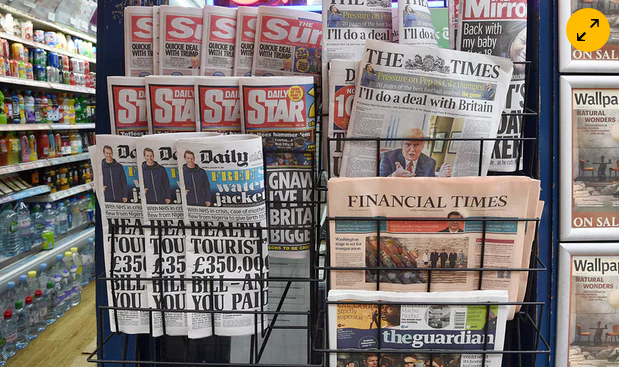
As the article states, the latest set of ABC figures for national newsprint sales may not be too surprising in that they confirm a long-running downward trend in the popular and mid-market sectors. The article describes that The Daily Express for example went from selling an average copy of 391,226 in December 2016, down by 2.3% on the same month, and that the cut-price Daily Star (which boasts every day of being 20p cheaper than the 50p Sun), was down by 2.5% to 440,471. Of course, the online readership have offset the loss of print readers. According to a Newsworks press release, national newspapers jointly enjoyed a 16% year-on-year uplift across digital platforms, giving them a total of 31.5m unique browsers daily across the month of December 2016.

  • The Daily Mirror was the largest year-on-year faller, down by 11.7% to an average daily sale of just 716,923 copies.
  •  The Sun went down by 10.5% to 1,611,464. 
  • The Daily Mail lost 6.7% of it's headline per year
  • Daily Star Sunday: 257,790 (-13.2%); Sunday Mirror: 620,861 (-16.3%); Sunday People: 239,364 (-15.1%); Sun on Sunday: 1,383,048 (-5.83%); Sunday Express: 335,271 (-5.6%); and Mail on Sunday: 1,284,121 (-7.34%)


Story #69

http://fortune.com/2016/12/05/social-media-ad-spending-newspapers-zenith-2020/

"Social Media Ad Spending Is Expected to Pass Newspapers by 2020"

The article addresses how the amount of money spent on advertising on social media is set to catch up with newspaper ad revenues by 2020, as leading forecaster said. There is discussion about how the rapid expansion of the digital age has lead to a huge change in the way how consumers get their news through more convenience via the world wide web. Consumers are targeting themselves to much easier and "lazier" ways of getting information which just so happens to be from the Internet, leaving no room for newspapers which require money, plus the need to read.

  • global advertising expenditure on social media will account for 20% of all internet advertising in 2019, hitting $50 billion and coming in just one percent smaller than newspaper ads
  •  It expects social media to overtake newspapers comfortably by 2020
  • global advertising expenditure will grow 4.4% in 2017, the same rate as in 2016, which it said would be a strong performance given that big events like the Olympic Games, Britain's EU referendum and the U.S. presidential election boosted advertising this year
  • Online video advertising is also rapidly growing and set to total $35.4 billion across the world by 2019
Advertisements on Facebook are displayed on a computer monit

Monday, 8 May 2017

Case Study Summaries

Class case study summaries: 

Ladan - Social network Twitter
Twitter's 140 character limit simplifies politician's expression
Mentioning of "Black Twitter", where #BlackLivesMatter is popularised
Echo chamber of politics and the effects the audience/society can have on it 
Social media to voice their opinions 

Abayomi - Spotify Music streaming
'Unification of citizens' come together from different countries and come to listen to music 
75% of users using Spotify's free trials 
CD/DVD albums are susceptible to the effect caused by Spotify's streaming services

Amrit - Social media Instagram
Pluralism - Good for Instagram as it can be used for expression
Hyper-reality - fake reality 
Unrealistic expectations of beauty standards set

Sunny - Social media and American politics
UGC of Internet "memes" spread across, humouring Donald Trump
Use of Reddit "The front page of the Internet" where users express politics for social change
Fake News causing havoc in communities and misinforming to support the creator's intended agenda

Callum - Gaming industry - Activision and Blizzard
PC community building "mods" to create maps
$118.6 billion forecast 
The impact the gaming community has on the new and digital media - aids the marketing process

Katie - Documentaries/Netflix
Piracy of shows and movies damage the nature cashflow of the industry
A show called 'The Crown' spend £750k in a day to budget the one episode
No distribution costs when uploaded to the Internet online

Khadijah - Netflix
Founded in 1977
Globalisation of Netflix - everyone is attracted to it
Binge watchers gained because of its huge attraction

Harkiran - Film industry and distribution
Lionsgate
1 cinema trip = 7 months of Netflix
Marxist argue that the economic power lies to the distributors 


MEST3 PPE - Learner Response

1.) 
WWW: Some use of media terminology and theories.
EBI: Section B is too short - need to be 3+ pages!

2.) I did not meet my target grade - I need an additional 16 marks to meet my target grade.

3.) 
For Section A including questions 1-3, I made the following potential points:

  • Use of a narrative voice over
  • Use of soundtrack to establish tone
  • Opportunities for audiences to express their own values and beliefs
  • Role of audiences in providing feedback to media products
  • Changes in media technology / impact upon audiences and producers
4.) 
My strongest question in Section A was 2. Question 2 'How do media products encourage audiences to agree with a certain set of values and beliefs?' I think I did particularly better in this question than the others due to the fact that I incorporated other media products such as 'Gone Too Far' by Destiny Ekaragha. I also demonstrated some use of media terminology such as the uses and gratifications of both media products.

5.) My weakest question in Section A was 3. Question 3 'Should the media provide accessible platforms for alternative or oppositional voices?' This was due to the fact that my answer was relatively short.

6.) For Section B I chose question 6 and covered:

  • Impact upon, and responses of, traditional media producers
  • Recent developments in new and digital media
  • Changing demands of audiences
However, my answers were short and vague, and needed more elaboration to gain marks

7.) 
Q1.) As in the examiner's report stated, I missed out using the word 'media'. My paragraphs also were lacking media terminology.

Q2.) Missing more use theory and set of values offered by other media products, such as 'Gone Too Far' in my case.

Q3.) Missing out conclusion and comments on whether that the media 'should' provide platforms for alternative or oppositional voices.

Q6.) Made use of only one media product (Ill Manors in my case), and therefore lacked content to discuss about

8.)
Section A question 3:

The media's accessible platforms allows for alternative or oppositional voices. An influence that fuels this is new and digital media's social networks. Social apps ranging from Twitter to Facebook allows a demonstration of "free speech". Whether that the media "should" give the audience this opportunity is a question of how the audience themselves would want to use and consume information from the Internet. 

The role of media on people's everyday lives is a huge catalyst towards what hegemonic beliefs are set in the status quo. Objectively, specifically in the UK of the 18-to-24-year-olds surveyed, 28% cited social media as their main news source, which may seem like a relatively low number at first sight but once social media's endless synergy and links start to get involved, the numbers can quickly arise and have an impact. Fake news is the issue derived from this, and is rapidly growing causing a moral panic.

An example of this includes director Ben Drew or known by stage name "Plan B", who released ILL Manors a film presenting the slums of London and the hardships of life involved within the urban and "ghetto" teenagers/young adults, involving drug dealing to prostitution. He demonstrates his own passion and ethos of this film in his TEDx lecture, explaining his use of the media's platform to raise awareness on how misrepresented these types of characters are in the real world by the media. Ben Drew as a result acts as an opinion leader that is creating this new "echo chamber" that spreads a more positive view of the slums of London. Ben Drew even could be seen to be a model figure and pioneer for the unheard voices of the teenagers of London themselves, given the media is constantly casting them a bad name with derogatory headlines and their involvement with anti-social behaviour. This as a result demonstrate's Ben Drew's use of certain platforms that give an alternative and oppositional reading to audiences, particularly those foreign to the UK who might be interested in the country's history and context. 

His use of social networks such as Twitter has fueled this. Previously mentioned, not only did the TEDx talk and his other interviews vocalise the issues derived from the underclass youth and post riot London, but it also encouraged him to start a campaign called '#TAGLONDON'. The hashtag in Twitter is known to create a synergy of links throughout the Twitter universe, ultimately attracting attention. Twitter's special features such as the 're-tweet' button also influenced the campaign's awareness. This platform as a result gave users the opportunity to voice their opinions whether it was alternative or oppositional. Simply, they could re-tweet, like and comment on the official Ill Manors Twitter account post to show their support, which as a result means the audience themselves are collectively empowered to use these media platforms in order to allow their alternative/oppositional voices. 

Sunday, 30 April 2017

story #68

http://www.independent.co.uk/news/world/europe/french-voters-deluge-fake-news-stories-facebook-twitter-russian-influence-days-before-election-a7696506.html

story #68 "French social media awash with fake news stories from sources ‘exposed to Russian influence’ ahead of presidential election"

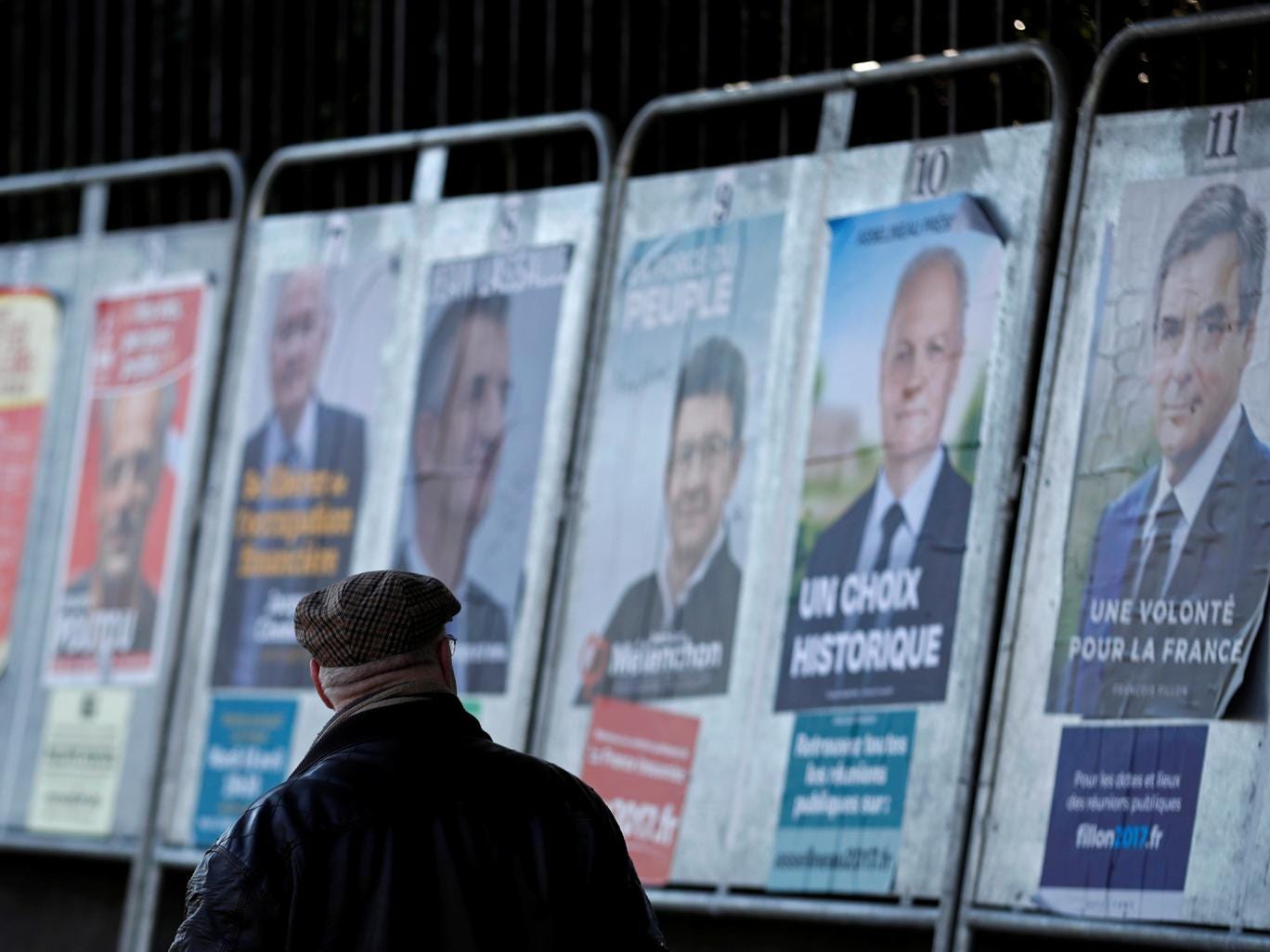
As the article states, French voters have been deluged with fake news stories on their social media feeds ahead of the country's presidential election, many from sources "exposed to Russian influence", new research has found.  
Researchers from Oxford University found up to a quarter of the political links shared on Twitter in France were based on misinformation. They were identified as deliberately false and expressed “ideologically extreme, hyper-partisan or conspiratorial" views with logical flaws and opinions presented as facts.
Another study published this week from the private research group Bakamo shows many of the fake news reports came from sources "exposed to Russian influence”. Facebook recently suspended 30,000 suspected automated accounts in France with many of the profiles distributing politically driven misinformation and propaganda. On Twitter, where automated accounts are allowed, many accounts that were used to promote Donald Trump have now turned their attention to pushing conspiracy theories and far-right ideas, according to Kevin Limonier, who is studying the manipulation of social media in the French election and and Clinton Watts, a former FBI agent and now a senior fellow at the George Washington University Center for Cyber and Homeland Security.

story #67

https://tribuneonlineng.com/media-icon-tasks-stakeholders-collaboration-save-print-media/

story #67 Media icon tasks stakeholders on collaboration, to save print media

As the article states, Malam Kabiru Yusuf, Chairman, Daily Trust Newspapers, on Saturday called on editors, journalists and media owners to work together  to bring  the nation and the media  out of recession.
Yusuf made the call at the Biennial Convention of the Nigerian Guild of Editors (NGE) in Lagos. The Convention Chairman said that the media industry began to experience recession long before it hit the nation’s economy.
He lamented that newspaper readership was on the decline and called on stakeholders to adopt strategies to save the print media.
Yusuf, however, noted that the social media was not responsible for the decline, as according to him, the decline started long before the advent of the social media.
He urged the stakeholders to collaborate to rekindle the interest to read newspapers again in Nigerians, in order for the media to continue to remain relevant.
He said that due to the decline in the purchasing power of the Naira, Publishers now published fewer copies and scrambled for adverts to survive.

Monday, 24 April 2017

story #66

https://www.theguardian.com/media/2017/apr/15/journalism-faces-a-crisis-worldwide-we-might-be-entering-a-new-dark-age

Story #66 Journalism faces a crisis worldwide – we might be entering a new dark age

As the article states, Australia’s two largest legacy media organisations recently announced big cuts to their journalistic staff. Many editorial positions, perhaps up to 120, will disappear at Fairfax Media, publisher of The Age and The Sydney Morning Herald, and News Corporation announced the sacking of most of its photographers and editorial production staff.
Both announcements were accompanied by corporate spin voicing a continuing commitment to quality journalism. Nobody in the know believes it. This is the latest local lurch in a crisis that is engulfing journalism worldwide.
Now, partly thanks to Donald Trump, many more people are turning their mind to the future of news, including “fake” news and its opposite.
News media for most of the last century appeared to be one relatively simple business. Gather an audience by providing content, including news. Sell the attention of the audience to advertisers. The internet and its applications have brought that business undone. As any householder can attest, the audience no longer assembles in the same concentrations. The family no longer gathers around the news on television. Most homes have multiple screens and news is absorbed as it happens.

story #65

https://www.theguardian.com/media/2017/apr/11/tiny-newspaper-in-us-wins-pulitzer-prize-for-taking-on-big-business

Story #65 Tiny newspaper in US wins Pulitzer prize for taking on big business

As the article states, a number of important local stories were leading the website of the Storm Lake Times, circulation 3,000, on Tuesday morning. Second-grader Alejandra Gonzales found a four-leaf clover in the field behind her school. A local woman had bought and renovated a building to house 25 elderly cats.
And in a modest announcement of just a sentence, another notable local happening: on Monday, Art Cullen, the paper’s owner and editor, was awarded a Pulitzer prize, the most prestigious award in global journalism, for his editorial writing. Fellow honorees for 2017 include the rather better read New York Times, Wall Street Journal and Miami Herald. The twice-weekly newspaper, serving a town of a little over 10,000 people, may not previously have been widely read outside Buena Vista county, north-west Iowa, but Cullen’s editorials – “fuelled by tenacious reporting, impressive expertise and engaging writing that successfully challenged powerful corporate agricultural interests in Iowa” – certainly caught the attention of the Pulitzer committee. He beat writers from the Washington Post and Houston Chronicle to the award.

Art Cullen, centre, with his son, Tom, left, and brother, John, outside the Storm Lake Times office in Iowa after winning the Pulitzer prize

Friday, 14 April 2017

Case study research tasks

MEST3 Independent case study: New/Digital Media

Case study research tasks

The basics
1.) My chosen industry is the music industry
2.) My chosen case study is Apple Music

The audience
1.) The new and digital media has changed people's experience as it gives them convenient access to music from the use of the Internet and electronics. 
2.) New and digital media has also changed the way in how consumers actually consume music, and in this way they can access music anywhere with an Internet connection via YouTube, Soundcloud, Spotify, Apple Music, etc
3.) New and digital media has also increased the audience size given that music can be uploaded anywhere onto the Internet, therefore the audience number grows with their presence on the Internet
4.) With Apple Music, audiences have now an alternative to music streaming other than using it's competitor Spotify.
5.) New and digital media means that streaming services offered by Spotify and Apple Music for example could be rejected in the sense that audiences could find an alternative that is free
6.) New and digital media has definitely influenced audience pleasures as they can access services through several ways
7.) The target audience for my case study are preferably teenagers to young adults, therefore ranging from the ages of 13-35. 

Institution:
1.) My chosen music industry has had their control impacted by new and digital media as there are other competitors that share the widespread of users 
2.) New and digital media has had an impact on the music industry's ownership as services similar can be accessed elsewhere where it is free 
3.) New and digital media has changed the way institutions produce texts as technology has had a huge influence in the way things are seen, presented, and used by the audience
4.) New and digital media has changed the way in how institutions distribute their product as audiences might tend to use technology to access and find things, therefore an institution for example might create a digital video ad instead of on a billboard.   
5.) New and digital media threatens the music industry as artists may not make profit due to music piracy, given money is the catalyst to music production
6.) New and digital media may offer a synergy of attraction that regulates the music industry, example, social apps such as YouTube for artists' VEVO music videos.

UGC:


Marxism, Pluralism and Hegemony:
1.) A Marxist would favour in consumerism and the economy continuing, therefore given that streaming technology helps the music industry a Marxist would have a positive view
2.) A liberal pluralist on the other hand would view different groups with competing interests whilst the media is subject to the wishes of the customer (supply and demand), therefore they would instead favour how consumers are able to listen to music
3.) There are some instances of hegemonic views on the music industry, such as how a music artists are seen to be presenting a lavish lifestyle when in fact in order for them to sustain that they will need sales

Globalisation:
1.) Globalisation has impacted the music industry in an undoubtedly positive way as there is a wider spread of audience to reach out to, therefore increasing their sales and regulating it more
2.) Globalisation has had a positive impact due to more audiences that can access the music industry's services, given that it is on the Internet 
3.) There are some instances of cultural imperialism in the music industry, such as VEVO and their 'Americanisation' where there is rejection of foreign songs being presented in their institution

Social media:
1.) The musc industry has used social medias, such as Twitter and Instagram to each respective artists that use the social platform as a method of reaching out to their fans. It's easily accessible and convenient
2.) Apple Music has both the social networking apps Twitter and Instagram to offer assistance and help to consumers, therefore as a result improving the customer and supplier relationship that improves their brand image
3.) Social media is an opportunity to both the music industry and Apple Music given that certain apps can help raise awareness 

Statistics:
1.) In the UK, about 7.4 billion tracks were streamed on audio services in 2013, twice the total recorded in 2012. While digital accounted for 50% of UK record industry trade revenues last year, streaming brought in 10%, and this figure is rising fast. Spotify, says about 70% of its revenues from advertising and subscriptions goes back to rights holders - the record labels, collecting societies and publishing companies. It says it has paid out more than $1bn (£587m; 735m euros) in royalties since its launch in 2008 to the end of 2013. One 2007 study by the Institute for Policy Innovation estimated that illegal downloading was costing the US economy $12.5bn (£7.3bn; 9.2bn euros) a year.
2.) The impact of new and digital media as a result has made the music industry, specially Apple Music and Spotify the opportunity to expand their regulation.
3.) The impact on audiences is positive given that they're now able to access their favourite artists' newly released albums and music officially through streaming services provided by Spotify and Apple Music, giving them a sense of "premium privilege" 

Theories:
Uses & gratifications - some consumers may use streaming services from Apple Music as a way of getting their "premium privilege" when they are for example, the first ones to listen to an album or song released by a popular artist i.e. Drake. As a result, this may result in a "luxury" lifestyle. 
Two step flow theory - influential for music critics for example, those who listen first and give a review might change people's views prior to buying an album/song and listening to it. If it's a positive review then sales will increase, but vice versa if it's negative.
Surveillance - Similarly, consumers might purchase the top rated, top played, top hits, etc, to introduce themselves to what the social norm of music is nowadays. As a result, there is a cultural transmission.

Issues/debates:
As a result of streaming services introduced with Apple Music and Spotify, the music industry has had an influx and has given artists a chance to regulate and expand their careers.

Wider examples and secondary texts
Social media's influence of a 'two-step flow model'; echo chambers; opinion leaders, etc to create hype

Saturday, 1 April 2017

story #64

https://www.theguardian.com/media/2016/aug/10/fairfax-media-records-8935m-loss-due-to-newspaper-writedowns

story #64 "Fairfax Media records $893.5m loss due to newspaper writedowns"

As the article states, the publisher of the Sydney Morning Herald and The Age, Fairfax Media, has posted a full-year net loss of $893.5m compared with an $82m profit last year after announcing a close to $1bn write-down of assets last week. The media company, which now makes 50% of its profits from online property business Domain, last week separated the profitable website from its struggling newspaper division. Total revenue also declined in the 12 months to 26 June, to $1.83bn, from $1.87bn the previous year, while net operating profit fell 7.6% to $132m. Fairfax announces billion-dollar write-down and plan to split off Domain. Despite an increase in pre-tax profits at Domain and a 20% growth in group digital revenue, Fairfax was hindered by the continued poor performance of its flagship mastheads. Profits in its metro division, which houses the Canberra Times as well as the Herald and The Age, fell nearly 45% to $39m, while profits at local and regional newspapers fell 10% to $110.9m. There are 209,000 paid digital subscribers to the SMH, the Age and the Australian Financial Review, accounting for $38m but it is not enough to offset the losses on the newspapers. With print circulation revenue and print advertising revenue both declining Fairfax CEO Greg Hywood confirmed it was only a matter of time before the Monday to Friday editions of the metropolitan papers ceased publication in line with global trends.

  • Sydney Morning Herald and The Age, Fairfax Media, has posted a full-year net loss of $893.5m compared with an $82m profit last year after announcing a close to $1bn write-down of assets last week
  • the media company, which now makes 50% of its profits from online property business Domain
  • Total revenue also declined in the 12 months to 26 June, to $1.83bn, from $1.87bn the previous year, while net operating profit fell 7.6% to $132m
  • Canberra Times as well as the Herald and The Age, fell nearly 45% to $39m

story #63

https://www.raconteur.net/culture/tech-trumping-traditional-media

story #63 "Tech trumping traditional media"

As the article states, overall sales of the national titles are falling at a rate of about 10 per cent a year while regional dailies are declining faster. Local papers, which initially bucked the downward trend, have also seen their sales tumble over the past decade.
Yet the digital audience for newspaper content has increased to levels that far exceed the numbers they enjoyed at newsprint’s circulation zenith in the 1960s.
Editors happily point to the millions of people who access their websites. By contrast, their owners and commercial managers sadly point to the financial reality: advertising revenue, the lifeblood of newspapers for more than 150 years, is taking flight. In the jargon of the newspaper trade, newsprint pounds have been replaced by digital pennies. Monetising content has proved more difficult than first appeared because advertisers and their media-buying agencies prefer to seek consumers through social media and, of course, the internet behemoth that is Google.
Their reasoning for the switch from traditional advertising outlets to online alternatives is understandable. In this increasingly connected world, it is easy to track and measure performance. The data is easily available and enables advertisers to target consumers more efficiently, and cheaply, than ever before. They can guarantee that their goods and services reach the right people. This facility is one of the major reasons for the recent prediction by PwC that the UK media and entertainment sector will grow at a rate of 3 per cent a year, making it worth £68.2 billion by 2020.

  • ecent prediction by PwC that the UK media and entertainment sector will grow at a rate of 3 per cent a year, making it worth £68.2 billion by 2020.

#62

https://tribune.com.pk/story/1370473/female-journalists-still-taboo-quetta/

#story #62 "Why are female journalists still taboo in Quetta?"

As the article states, a vast majority of families in Quetta look down upon women who work in the media. Even though there are many girls who join journalism school, not many step into the industry for professional work. As a result of this, there is an acute shortage of female journalists in the city, and little to no coverage of women issues is given in the media. According to the records of Directorate General of Public Relations Balochistan, there are 25 news channels and 171 daily newspapers operating in Quetta. Quetta-based journalist Hafeezullah Sherani says there are only three women reporters working with news channels and none associated with newspapers. The three reporters, he adds, don’t have Pakhtun or Baloch background and hence are unaware of local customs and languages.

story #61

http://www.pressgazette.co.uk/brexit-concerns-fail-to-stop-uk-advertising-growth-except-for-the-newspaper-and-magazine-industry/

story #61 "Brexit concerns fail to stop UK advertising growth (except for the newspaper and magazine industry)"

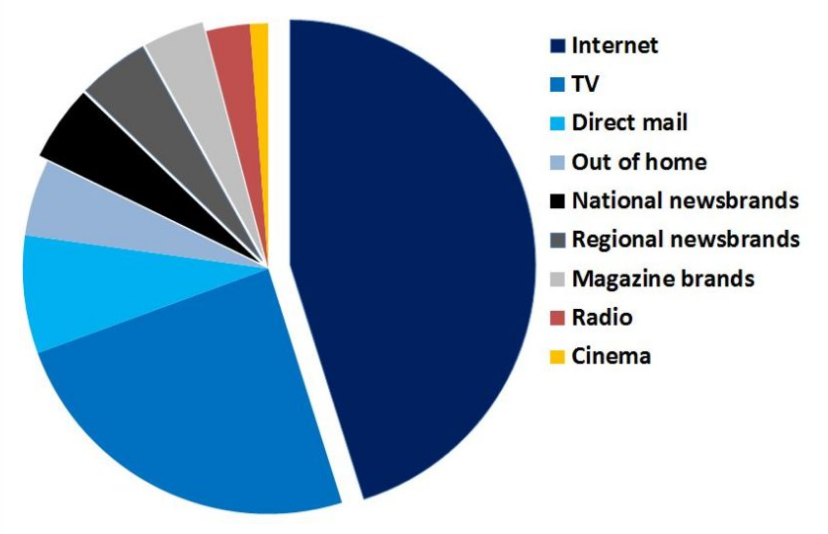
As the article states, advertising spending has been forecast to grow across the board in the UK next year with the exception of national and regional newspapers and magazines. In both the newspaper and magazine industry, advertising income is estimated to be declining, according to the AA/Warc Exenditure report. In the national press slight digital growth is failing to cancel out a sharp drop in print advertising. And in the regional press both print and digital advertising are estimated to be declining. National newsbrands (the national press) attracted £1.1bn of advertising last year (down 9.8 per cent), of which digital comprised £224m (up 2.1 per cent) – the report states. Regional newsbrands (the regional press) fell 12 per cent to just over £1bn of which £196m was digital (down 1.7 per cent year on year). The pace of decline for national and regional newsbrands is forecast to slow slightly next year to 7.9 per cent and 8.6 per cent respectively. The quarterlyreport found that total UK advertising grew 4.4 per cent to £21.1bn in 2016 and is set to grow by a further 3.2 per cent in 2017. Chief executive of the Advertising Association Stephen Woodford said: “That adspend held up after the referendum is another marker of the strength of the UK’s advertising and media industries. As the Government gears up for Brexit negotiations and a new industrial strategy, it must prioritise protecting this global advantage.”

  • National newsbrands (the national press) attracted £1.1bn of advertising last year (down 9.8 per cent), of which digital comprised £224m (up 2.1 per cent)
  • Regional newsbrands (the regional press) fell 12 per cent to just over £1bn of which £196m was digital (down 1.7 per cent year on year).
  • The quarterlyreport found that total UK advertising grew 4.4 per cent to £21.1bn in 2016 and is set to grow by a further 3.2 per cent in 2017