Monday, 21 November 2016

marxism, pluralism and hegemony

NDM: Marxism, Pluralism and Hegemony


1.) In summary, Ian Thompson, an elderly man, was beaten on the leg with a baton by police during  a protest while being suspected to be one of the protesters, while the end result being his death, and while he was innocent, minding his own business, which has caused a lot of controversy regarding the topic of police brutality. 

The preferred hegemonic view of this incident would be to blandly defend the police force as they're thought to protect citizens that do no wrong, and vice versa to criminals. However, any sane person would agree that Thompson was a victim of unnecessary police brutality, and clearly seen from the UGC video Thompson was not apart of the protest and was simply minding his business, to which then the police officer unprofessionally couldn't compose himself with. The new and digital media as a result then challenges this cover up that the media would have bought to defend the police force's image, while UGC clearly says otherwise, presenting objective evidence.

2.) The author, Nick Lacey, explores whether Web 2.0 has really democratised our access to the media, and switched the power from producers to audiences, or whether it has simply become absorbed into the values of 'old media'. In short, Lacey believes that hegemonic values can be challenged by the new and digital media, where social networking apps to spread UGC, therefore we are not this passive audience that simply is subject to being fed news, and that media is no longer 'gatekeepers' anymore.

3.) I think any rational user on the Internet would look one step further, therefore challenge any situation that is happening based on the objective information they see, and this happens to be UGC that seems to be the catalyst to these challenges. Of course too, the media is much less like the 'old media' now, where there is a constant switch between the black and white side of news, and is very hard to give a definitive judgement purely based on what information you're being presented with. As a result, consumers can turn to other alternative news consumption, for example, social networking apps such as Twitter to share your opinions as well as acknowledge other people's opinions.

4.) The hegemonic values of political events, especially concerning presidential candidates have taken their influence and their effect to the point other countries feel as if they're being affected as a result too. Obviously, people would challenge the dominant ideology between their opinion on who should've rightfully been the president of United States, and whether the outcome was the right judgement or not, based on their subjective opinions. This is the same case of Brexit, where people have accused the voters of the winning opposition to have been 'racist'.

Tuesday, 15 November 2016

newspapers are social media

http://www.wsj.com/articles/newspapers-are-social-media-1477436218

"Newspapers Are Social Media"

The article explains how social media deliberately takes advantage of their crowd or 'loyal subscribers' by putting them in what is known as "The Content Trap". The writer of the article presents and explains steps in how they carry out this scheme, making consumers as a result value content so much that they will be willing to pay for it. It works something like this: Step 1: Produce great journalism. Step 2: Become a trusted news source (e.g., by winning acclaim such as Pulitzers). Step 3: Use that reputation to get subscribers. Step 4: Offer the readers up to advertisers. Step 5: Market the weekend edition to nonsubscribers. And, finally, Step 6: Use the virtuous circle (readers beget advertisers beget more advertisers) to charge high ad prices. 

  • Guardian's losses hit £69m but it gains more than 50,000 paying members
  • $500,000 to $1 million made are: Brentwood Home Page, Front Porch Forum, Noozhawk, San Angelo LIVE, Technical.ly, The Philadelphia Public School Notebook, VTDigger
Seeing that the majority of users have adblock on, news institutions simply cannot sustain themselves at the moment without any revenue, and as a result the news online news industry is going downhill, as it did with print media.

Image result for news companies

spend more time consuming media on phone than computers

http://www.mirror.co.uk/tech/brits-now-spend-more-time-9227627

"Brits now spend more time consuming media on their mobile phones than on computers"

The article states how British people, including adults, consume news more on their mobile phones than the expected desktop computers. Apparently, "mobile devices have overtaken computers as the primary method of consuming digital media in Britain for the first time." As a result, there are objective predictions made based on current statistics, predicting that mobile will have a 29.5% share of total media time spent per day - just a single percentage point behind TV. Comments made, ""In fact, small proportions of digital and mobile time are actually taken up by TV-like viewing, with a plethora of on-demand and streaming options being keenly embraced by UK consumers."; "...data speeds are getting faster and people are becoming more efficient on apps - which means less time spent using them."; "...next year, more than half of all media time in the UK will be spent with digital devices."

  • mobile will have a 29.5% share of total media time spent per day - just a single percentage point behind TV.
  • adults in the UK will spend an average of 2 hours and 29 minutes per day on their mobile phone or tablet in 2016, compared to 2 hours and 16 minutes on their desktop or laptop.
Acknowledging the situation as a media student, it is no surprise that there is more consumption on mobile phones than on computers simply due to the fact of new and digital media pioneering new methods of news consumption.

Image result for news


http://www.mirror.co.uk/tech/brits-now-spend-more-time-9227627


Monday, 14 November 2016

NDM: News Values

NDM: News Values


  1. Conflict - World Wars. A war that escalated from the assassination of Archduke Franz Ferdinand, and catalysed by nationalism, pending from country to country. There is a surprise from the discursive politics involved. 
Progress - President Obama January 20,2009. A triumph and achievement in the eyes of a black community, seeing that he was the first black presidential candidate in modern day after the circumstances and events their name has gotten through.
Disaster - 1931 China floods that have an accumulated death toll of around 1 million to 4 million deaths - a very devastating destruction as it is regarded as top in the deadliest natural disasters since 1900. 
Consequence - 2016 Presidential candidate winner Donald Trump. The black and white choice made by America has left one side being affected, while the other side benefiting.
Prominence - Death of Osama bin Laden. America identified him to be the mastermind and power behind terrorist attacks regarding 9/11, and his death simply served as a redemption in some ways.
Novelty - 

3.) One story the factsheet presents:  http://www.guardian.co.uk/world/2011/
apr/20/british-servicewoman-lisa-headkilled-
afghanistan?INTCMP=SRCH
The story presents the death of a "British" servicewoman who died in Afghanistan, and is more significant because there is someone British mentioned, as opposed to anyone else that would be referred to as just "a person". 

4.) The formal definition of a gatekeeper is that "Gatekeeping is the process through which information is filtered for dissemination, whether for publication, broadcasting, the Internet, or some other mode of communication." Or in simpler terms, gatekeepers are essentially the 'keepers' to what information is to be published and mediated depending on perhaps their importance and people's general interests in order to make headline views.

5.) Ways of bias in news include:
  • Only one side of the story is given
  • 'Cherry picks' good parts to make something seem interesting and vice versa
  • Using subjective values instead of objective
  • Unchallenged assumptions
  • Lack of context
  • Headlines and stories do not match
6.) Twitter for example, is a haven of UGC that influences more subjective values in news being presented as all users have a right to voice their opinions or mediate one by using the app's special features, example, re-tweeting. WikiLeaks also have a similar scheme in the sense that there is some confidential information being leaked, and isn't something that is always being presented in the media. 

7.) Speculations of a "secret meeting" has been bought to view regarding presidential elections of 2016 by WikiLeaks. Essentially creating more controversy, it adds more fuel to the ongoing events, therefore creating more headline views and circulating the situation more.

8.) 
What does this reveal about how Sky views Twitter as a news source?
It states how UGC can benefit the presentation of news by bring objective evidence to the table. 
What does it say about how news is being produced?
News being produced is now at an objective level and is without bias as there are evidence from eye-witnesses sharing their point of the view.
What role does the audience have in this process?
The audience are allowed to give a fair judgement based on what they see from different views of a story.
Why might this be a problem for journalistic standards?
As a result of UGC, essentially everyone is a 'journalist' or some sort, and therefore there is almost no distinction between the consumers and journalists as they're all one sort.

9.) Galtung & Ruge's new values is being affected by digital media technology as the world wide web or Internet due to information being leaked and passed at an unavoidable rate, and as once put by a journalist "Trying to take information out of the Internet is like trying to take piss out of a pool." The judgement in which people stand by is also extended, as there are more accurate assumptions to be made based on objective values.

10.) 

  • Negativity - Negativity is now being more widespread, for example, the freedom of speech is demonstrated through the Internet, where people can anonymously express their opinions about something.
  • Unambiguity - As we know, the media doesn't always present definitive and viable information to the public, therefore there is always something missing or being misrepresented.
  • Predictability - As social networking apps such as Twitter and Facebook spread information and rumors about something significant circulating and aways popping up at your feed, it makes users acknowledge the situation and what is happening.
  • Balance - Audiences are now able to view more perspectives of a story.
  • Continuity - Regarded as news as the story circulates around the Internet on all social apps, online news headlines, etc
  • Elite nations and people - Affairs regarding politics etc are information that is also being presented to the public


Tuesday, 8 November 2016

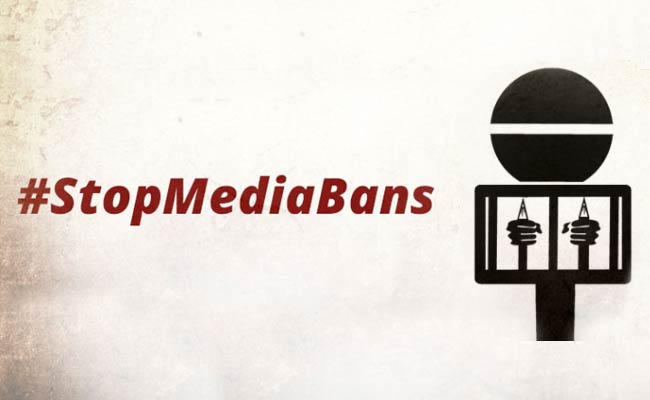
Stop media bans

"Stop Media Bans: A Joint Statement By News Organizations"

http://www.ndtv.com/india-news/stop-media-bans-a-joint-statement-by-news-organizations-1622916

The article expresses their frustration over media bans, claiming "As citizens of a free nation and as journalists, we are keenly aware that an independent media is among the pillars of a vibrant democracy. For India to progress, we must move forward in the direction of more democracy, not less. Bans on news organisations are a big, dangerous step backward. Attempts to muzzle the free press must be resisted-we owe it to our fellow citizens." And this states their moral reasoning behind why they decided to take action.

  • Media bans are more common in 3rd world countries, where the laws can be breached much more easily 
  • Media bans simply cause a chain of problems, from arising protests as a result to start with
Media bans are simply a violation of freedom of speech, and it essentially strips people of voicing their opinions whether for reasons of confidential information being spread and stopped by the government, or simply because their views were unpopular, and as a result were shammed by their peers and the media. End-line being, organisations have every right to take action against media bans.


Image result for media bans

Can social media call the election

https://www.cnet.com/news/twitter-facebook-donald-trump-hillary-clinton-president-republican-democrat/

"Can social media call the election?"

The article discusses the raging topic in USA at the very moment - which presidential candidate will be elected, Donald Trump or Hillary Clinton? The article then proceeds to comment on how the media also has a huge influence on the two answers, where social network posts from the famous Twitter has a contribution to this. The California Institute of Technology unveiled a website Monday called Tweeting the Election that breaks down tweets by geography and the political background of the person tweeting. As a result of all empirical evidence being gathered, these numbers may give us an earlier breakdown of how the election might pan out. Clinton also used social media to her advantage, launching a Spanish-language Twitter feed and website, using the global Internet to show their support for her.

  • 120 Twitter accounts in America
  • America has Twitter's majority of users, having 3x the users of Brazil who ranks 2nd most country using Twitter
I would answer the article's question by agreeing, and that yes, social media does in fact have a significant influence in how the election will end with, however these results would also have to be analysed at a deep and discursive level to give an unbiased outcome. Social media's will also give an anonymous voice to those who particularly don't want to make their decisions public, and by doing so anonymously on the Internet, they will not be subject to discrimination. 


Donald Trump and Hillary Clinton are going head to head in one of the most talked about elections in recent history